
No-dig repair · West Linn, OR
West Linn Trenchless Pipe Lining: When a Cracked Sewer Line Can Skip the Trench
A cracked or root-damaged sewer pipe does not always mean a trench across the yard. Lining can restore some pipes from the inside, and some cannot be lined at all.
Call West Linn OR Expert Plumbers and describe what the camera showed or what keeps backing up. A plumber will tell you whether lining is worth pricing against digging.
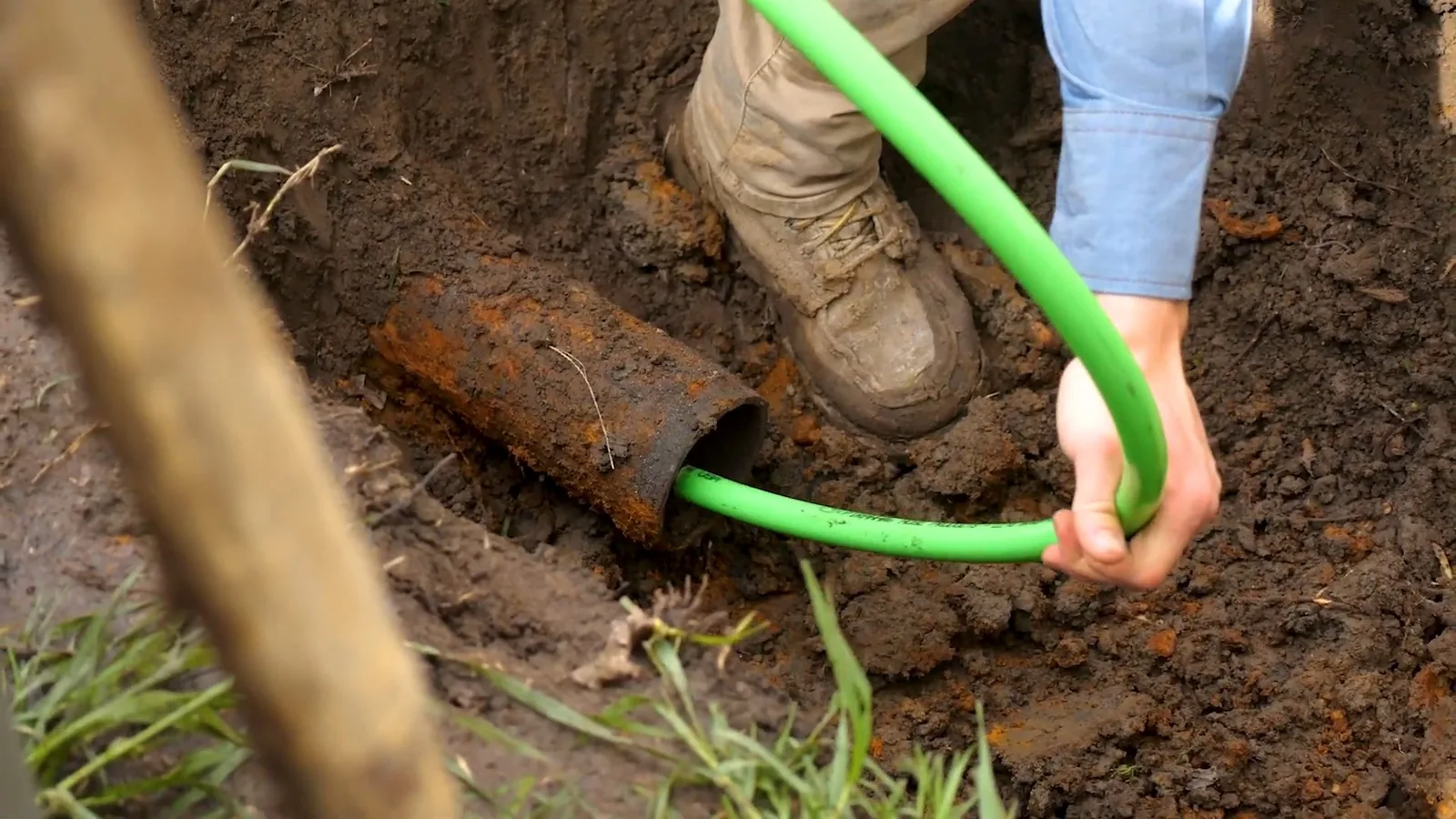
What trenchless lining does to a failing sewer pipe
Cured-in-place lining puts a resin-soaked liner inside the old pipe. The liner is inflated against the pipe wall and cured so it hardens into a new pipe inside the old one. The old pipe stays where it is.
Only small access holes are needed at each end, so the yard, driveway or landscaping is disturbed far less than with a trench. Another trenchless method, pipe bursting, pulls a new pipe through the old route.
Trenchless or open trench: the comparison that decides the job
| Question | Trenchless lining | Open trench |
|---|---|---|
| What state must the pipe be in? | Intact enough for a liner to seal against, with no collapse or major shift | Any state, including collapsed or badly offset pipe |
| What gets disturbed? | Small access holes at the ends | A trench along the pipe, and everything above it |
| What does the new pipe look like? | A liner inside the old pipe, slightly smaller inside | A full-size new pipe in the old route |
| What can go wrong? | A pipe too damaged to line, or connections not reopened | Utility lines or roots in the path, and surface restoration |
Neither is always better. The pipe's condition and what sits above it decide. Ask for the comparison in writing for your own line, using the camera footage as the reference.
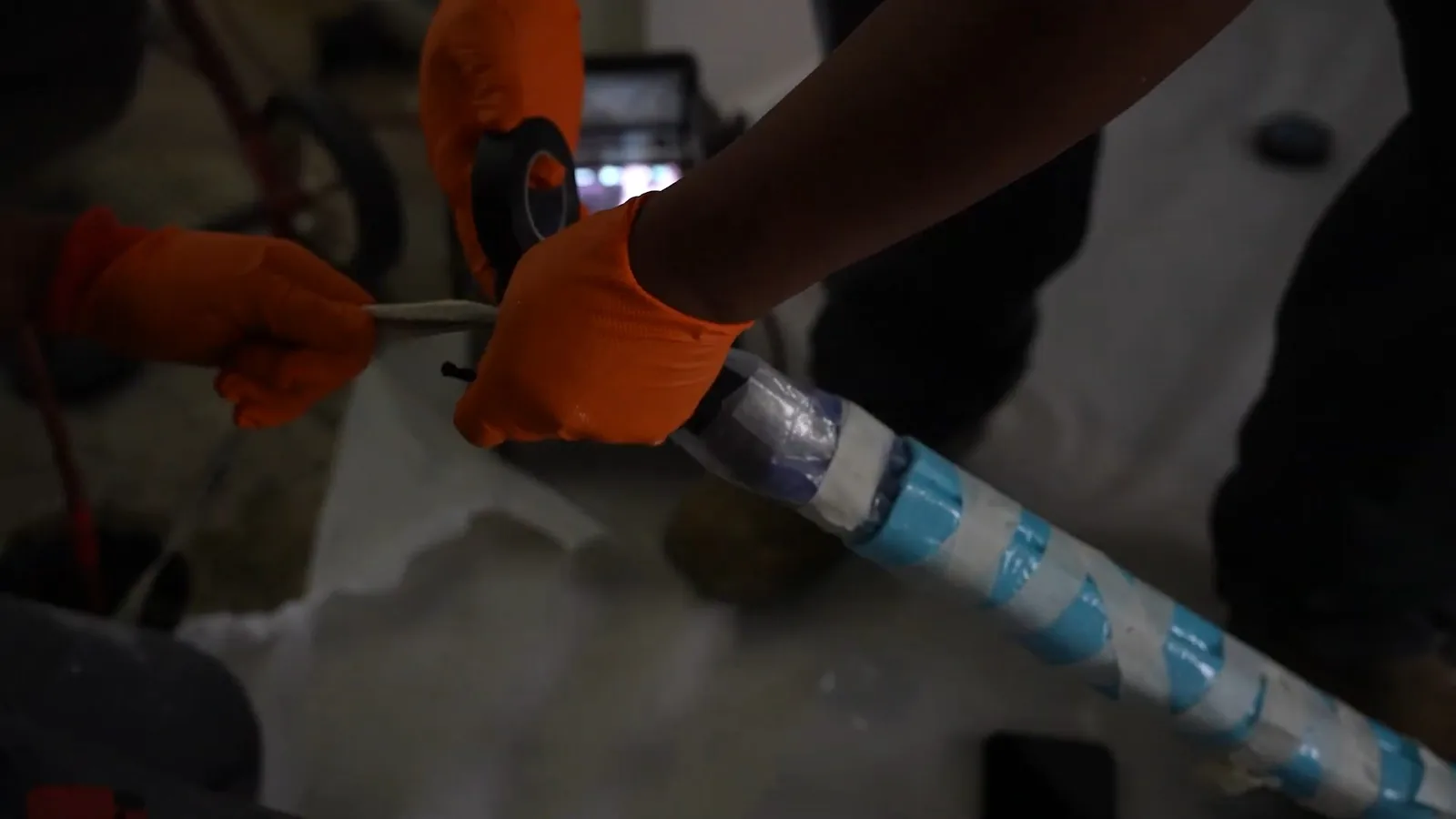
Before relining: the camera and the cleaning come first
A liner cannot go into a pipe that is full of roots or scale. The line is cleaned first, then recorded with a camera, so the plumber knows its length, its bends and its condition.
- Ask for the camera recording of the line before any lining decision.
- Ask how the line will be cleaned and whether roots will be cut out first.
- Ask what the camera shows at each joint and at each bend.
- Ask for a second recording after the work is finished.
The page on traditional sewer line repair explains what a camera inspection shows and how to read the findings.
Lining or pipe bursting: two trenchless methods
Lining restores the pipe that is already there. Pipe bursting works the other way: a bursting head breaks the old pipe outward as a new pipe is pulled in behind it. Both avoid a long trench.
Lining fits a pipe that is damaged but still in line. Bursting can fit a pipe that is too far gone to line, because the new pipe does not depend on the old one. Bursting needs an entry pit and an exit pit, and it has to avoid other buried lines nearby, which is another reason to call 811 first.
What lining fixes and what it does not
A cured liner seals cracks and open joints, and it can close the gaps where roots get in. It gives the pipe a smooth, continuous inner wall.
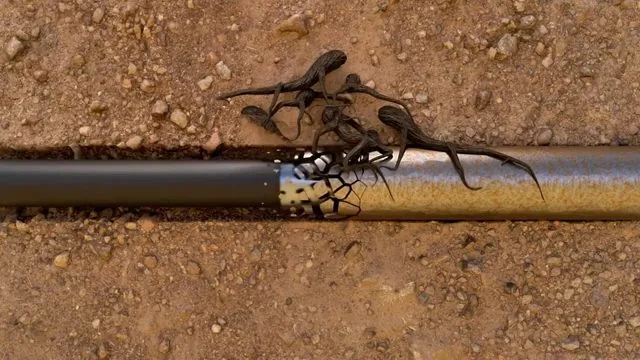
- It fixes: cracks, open or leaking joints, rough or scaled pipe walls and root entry points.
- It does not fix: a low spot that holds water, a collapsed section or two pipe ends that have drifted apart.
- It does not clear roots by itself. The roots are cut out first, and a nearby tree can still send roots toward any joint or connection that is not sealed.
What to expect in the yard: access holes and restoration
Even trenchless work opens the ground in a few places. Expect a small excavation at the cleanout or at the point where the lateral leaves the house, and possibly another near the property line.
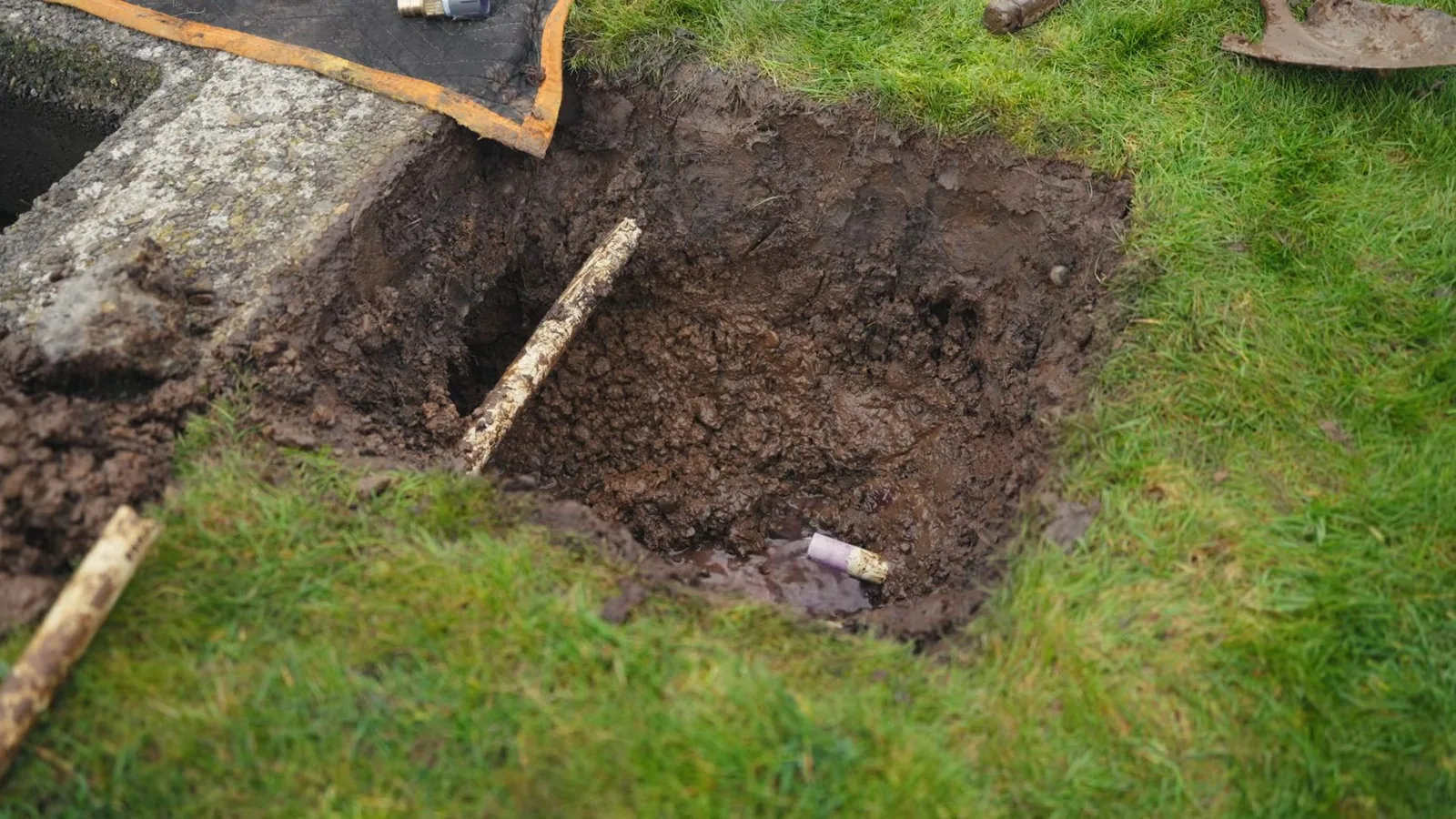
Settle three things before work starts: where the access holes go, who restores the surface afterward, and which buried utilities are marked. Ask about each one as part of the quote, not on the day.
When lining is not the answer
Some pipes cannot be lined. A collapsed section, a large offset where two pipes no longer meet, or a low spot that holds standing water may rule it out. A pipe too damaged to hold a liner will not be saved by one.
That is why the comparison needs the camera. A plumber who recommends lining without looking inside has not done the work needed to recommend it.
Whose pipe and whose permit
In West Linn the property owner owns and maintains the lateral from the house to the City main (West Linn Code §4.045). That makes lining a decision for the owner, along with the cost.
A permit is required before anyone connects to, alters or uncovers a public sewer, and nothing may be covered before approval (Code §4.005 and §4.030). A liner that stops short of the main may stay on the private side. One that reaches or joins the City main may not. Ask the plumber to say which, and who handles the permit.
Call 811 before any digging, including for the access holes. Homeowners are included in the requirement.
Trenchless repair of lines under the slab
Trenchless methods can also apply to water or drain lines under a concrete slab. Rerouting or lining a line may avoid breaking the floor. Whether it fits depends on the line and the foundation.
This page does not assume your home has a slab. The page on slab leak help covers how to tell, and where a slab leak is actually the problem.
Questions to ask before agreeing to lining
- What did the camera show? Ask to see the footage of the damage and the length to be lined.
- Why lining, not digging? Ask what in the footage rules each option in or out.
- How are the connections handled? Ask how side connections are reopened after the liner cures.
- What is covered in writing? Ask for the scope, the length lined and what is and is not warranted, in writing.
- What will the final recording show? Ask for the post-work recording as part of the job.
Trenchless sewer repair questions
When does trenchless sewer lining make sense instead of digging?
Lining makes sense when a camera shows the pipe is cracked, scaled or root-damaged but still intact and in line, and the yard or driveway above it is worth protecting. Digging is needed for a collapsed, badly offset or sagging pipe. Ask to see the footage that supports either choice.
Is lining an option for your sewer line? Call to find out
Tell us what the camera showed and what keeps backing up. You will hear whether lining is worth pricing against digging. Common questions about work like this are answered in the sewer questions answered.