
Kitchen plumbing · West Linn, OR
West Linn Garbage Disposal Repair: Jams, Leaks and Fitting a New Unit
A disposal that hums and will not turn, one that leaks under the sink, or one that has simply gone dead. Each has a different cause, and only some are worth repairing.
Call West Linn OR Expert Plumbers and describe what the unit is doing. A plumber will tell you what is safe to check and whether a repair or a replacement makes more sense.
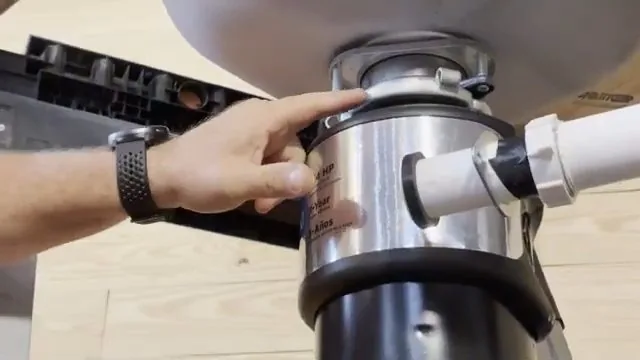
Safety first: never put a hand in a disposal
Before anything else, switch the disposal off at the wall switch and, for any hands-on work underneath, switch off its breaker or unplug it. A disposal that seems dead can start if power returns.
Never reach into the grinding chamber with a hand, even with the power off. Use tongs or pliers to lift out anything you can see. If you cannot see it, leave it for a plumber.
Disposal hums but will not spin: freeing a jammed blade
A disposal that hums and does not spin is usually jammed. The motor is trying to turn a blade that something is stuck against. Leave it running and it can burn out, so switch it off.
- Switch it off and cut the power. Wall switch off, then the breaker or the plug.
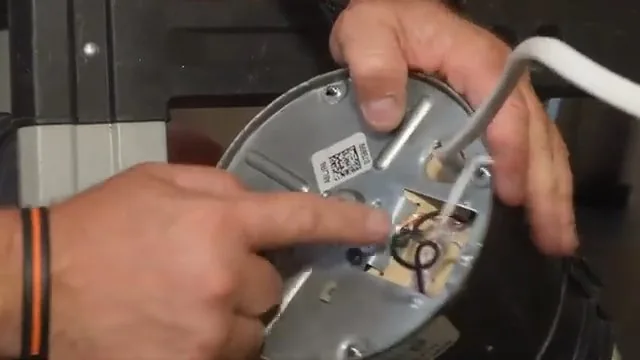
- Loosen the blades from underneath. Many disposals have a hex socket in the center of the underside. A hex key turned back and forth there rocks the blades loose.
- Remove what jammed it. Look into the chamber with a flashlight and lift out what you see with tongs or pliers, never fingers.
- Press the reset button. A small red button on the bottom pops out when the motor overheats. Press it in, restore power and run cold water as you test.
If it hums again right away, or does not respond at all, the motor or the wiring may be at fault. That is a repair or a replacement, not another round of resets.
Call now if water is spraying, if you smell burning, or if the sink and disposal are flooding the cabinet. Shut the water at the shutoff valves under the sink and switch the power off.
Garbage disposal leaking: where the water comes from
A leaking disposal can be a small fix or the end of the unit. Dry the area, run water and watch where the drip starts.
| Where it leaks | What it often means | Repair or replace |
|---|---|---|
| At the top, where the disposal meets the sink | A loose or worn sink flange seal | Often a repair |
| At the dishwasher hose connection | A loose clamp or a worn hose | Often a repair |
| At the drain pipe connection on the side | A loose or worn gasket or coupling | Often a repair |
| Through the body or the bottom of the unit | The housing has cracked or corroded | Usually replacement |
Leaking disposals are often a seal or a connection, which a plumber can replace without changing the whole unit. Water coming from the housing itself is a different story, because the housing cannot be patched.
Repair or replace: what decides it
- A leaking housing: replacement.
- A seized motor that will not reset: usually replacement, because the repair costs close to a new unit.
- A loose seal or connection: repair.
- A unit that has jammed once and now works: nothing to repair.
- An old, noisy, repeatedly jamming unit: often worth replacing while the cabinet is open.
Ask for both numbers, the repair and the replacement, before you decide.
Smells and slow draining from a disposal
A disposal that smells is usually holding food residue on the walls of the chamber or on the underside of the splash guard. Switching off the power and scrubbing the rubber splash guard with a brush and dish soap often fixes it. Running cold water for a minute after each use keeps residue moving.
If the sink drains slowly even when the disposal is off, the clog may be past the disposal in the drain line, and grinding more food only adds to it. A disposal that backs up into the second side of a double sink is a drain problem, not a motor problem.
Continuous or batch feed disposal, and which motor size?
Most homes have a continuous-feed disposal, which runs while a wall switch is on and food is fed in. A batch-feed unit runs only when its lid is twisted into place, which suits households that worry about hands and utensils near the chamber.
Motor size is a trade-off. A larger motor grinds tougher scraps and runs more smoothly, but costs more and needs more room under the sink. Ask which size the plumber recommends for how your household cooks, not only what fits.
Garbage disposal installation: what a new unit needs
Replacing a disposal is more than swapping a unit. The plumber also deals with the mounting assembly under the sink, the drain connection, the power supply and, if the sink has a dishwasher, the dishwasher hose.
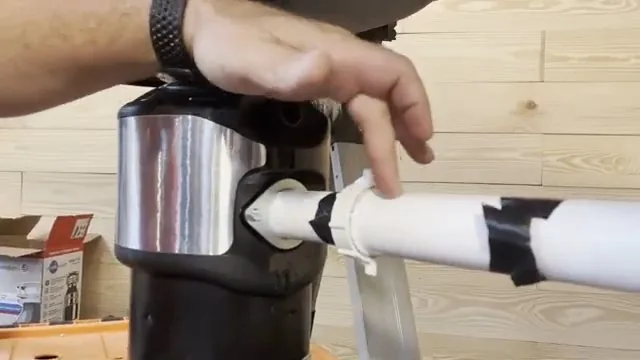
- Power: a disposal needs a switched outlet or a hardwired connection, and a new unit may differ from the old one in how it is wired.
- Dishwasher knockout plug: a new disposal has a plug in its dishwasher inlet that has to be knocked out before the hose is attached. Skipping it is a classic reason a dishwasher will not drain.
- Fit under the sink: the unit's size and the position of its drain outlet have to work with the cabinet and the trap.
- Sink flange: a leaking flange is replaced with the unit, with fresh sealant.
If the electrical side is not already set up for a disposal, say so on the call, because that can change the job.
What a disposal should and should not take
- Run cold water before, during and for about a minute after use.
- Avoid fibrous scraps such as celery, corn husks and artichoke leaves, which wrap around blades.
- Keep grease and oil out of the sink, since it hardens further down the line.
- Keep bones, large pits, coffee grounds in bulk and starchy foods such as rice and pasta out of it.
- Never run chemical drain cleaner through a disposal.
If the sink itself is draining slowly and the disposal sounds fine, the clog is further along. The drain cleaning service page covers that.
Details that help a disposal call
- What it does: hums, stays silent, leaks or smells.
- Where the leak starts, if it leaks.
- Whether you tried the hex key and the reset button.
- The brand and age of the unit, and whether a dishwasher is connected.
- A photo of the underside of the unit and the cabinet.
If a leak has already soaked the cabinet floor or the kitchen floor, drying is a separate job. See the page on drying out after a leak.
Garbage disposal questions
Why does my garbage disposal hum but not turn?
It is usually jammed. Switch it off and cut the power, loosen the blades with a hex key in the socket on the underside if your unit has one, lift out anything you can see with tongs, then press the reset button. Never put a hand in the chamber. If it keeps humming or does not respond, the motor may have failed.
Disposal jammed or leaking? Call West Linn OR Expert Plumbers
Tell us what the unit does, where it leaks and how old it is. You will hear whether a repair or a replacement is the better call. Before you decide, what a disposal repair costs is a useful read.