
Water heating · West Linn, OR
West Linn Tankless Water Heater Services: Gas, Venting and Whether One Fits
A tankless unit heats water as it flows instead of storing it, so the questions are different from a tank swap. How much water do you run at once, what does your gas line carry, and where can the exhaust go?
Call West Linn OR Expert Plumbers and describe your house and your current heater. A plumber will tell you what a tankless unit would need and whether the change makes sense for you.
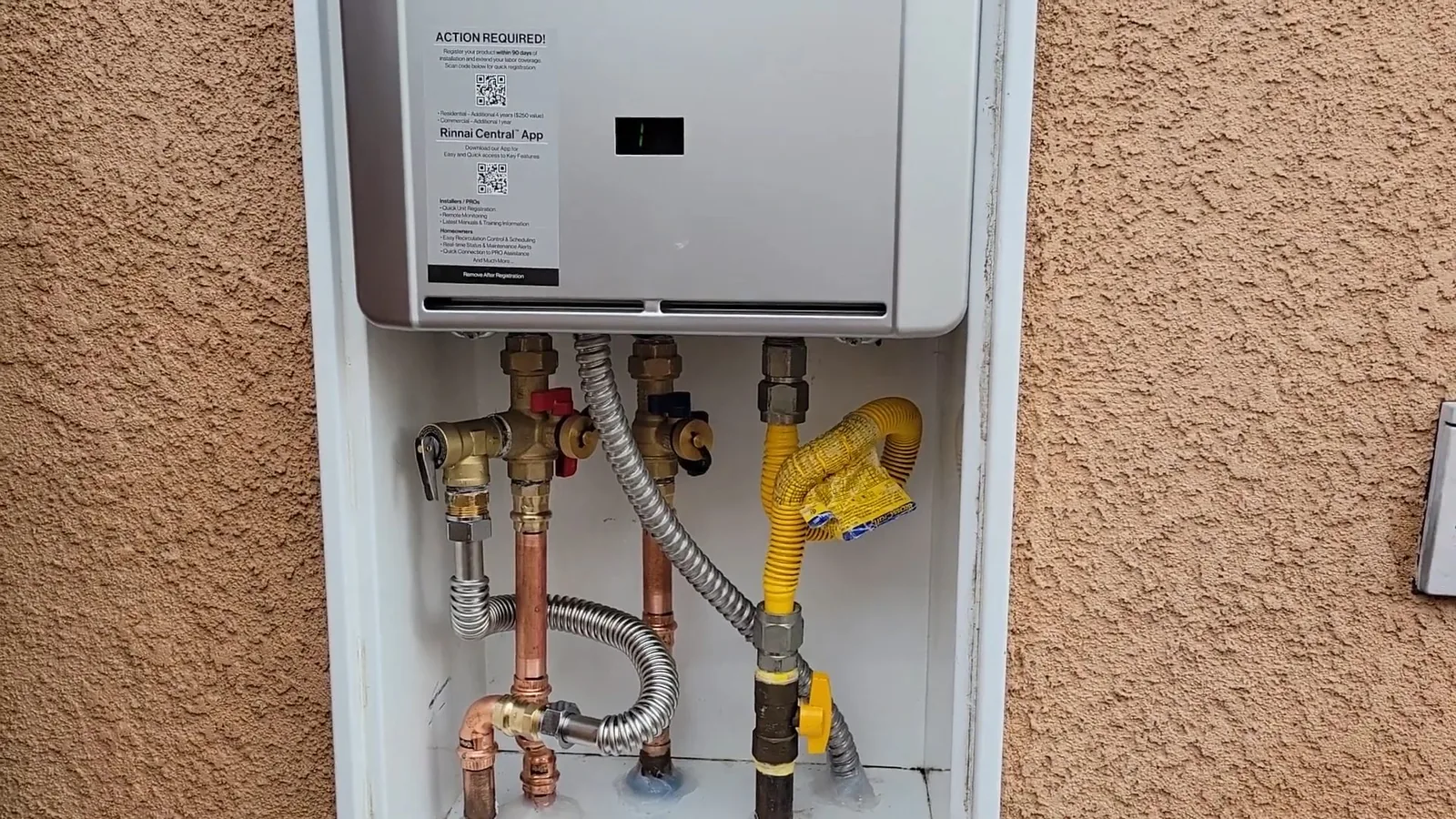
Does a tankless water heater fit your house?
The U.S. Department of Energy describes the main water heater types side by side, and tankless is one of them. Whether it suits a particular house depends on a handful of things a plumber checks on site, not on the brand.
| Question | Why it matters | What to find out |
|---|---|---|
| Gas or electric? | The fuel decides the supply, the venting and the cost of the swap | Which fuel your current heater uses, and whether you would change it |
| How much gas can the line carry? | A gas tankless unit burns a lot of gas for a short time, often more than a tank heater does | Whether the existing gas line and meter can supply it, or the line needs to be upsized |
| Where does the exhaust go? | Gas units need approved venting, and the route can be longer or different from a tank heater's | Where the vent could run through the wall or roof |
| Can the electrical panel handle it? | Electric whole-house units draw heavy current | Panel capacity and breaker space, which may call for an electrician |
| How much hot water do you run at once? | Every unit has a limit on how much water it can heat at one time | How many showers, the dishwasher and the washer might run together |
If a plumber quotes a tankless swap without asking about any of these, ask why.
West Linn's water quality reports describe the city's supply as soft. That makes heavy mineral scale a less likely problem inside a heater than it would be in hard-water areas, so be careful with anyone who sells yearly descaling as a given. Ask to see the scale.
How a tankless unit differs from a tank heater
A tank heater keeps a store of hot water ready and reheats it as it cools. A tankless unit has no store. When you open a hot tap, the unit fires or energizes and heats the water passing through.
The practical effect is that you do not run out because a tank emptied, but the unit can only heat so much water per minute. Run two showers, a dishwasher and a washing machine at once and a single unit may not keep up.
Cold incoming water also lowers how much hot water a unit can deliver, because it has more temperature to add. Ask the plumber to size the unit for your coldest months, not for a mild day.
Gas tankless water heater installation: line size, venting and the permit
Gas units are the ones most often chosen for a whole house. They are also the ones with the most to check before installation.
- Gas supply: the line, its size and the meter have to deliver enough gas for the unit running at full output.
- Venting: the unit needs an approved exhaust route, and the length and number of bends are limited by the manufacturer's instructions.
- Condensate: high-efficiency units that condense their exhaust produce acidic condensate that must be drained and, in many installs, neutralized.
- Clearances: the installation instructions set the distances to walls, openings and combustible materials.
Replacing a water heater is outside the minor-repair exemption in Oregon's plumbing rules (OAR 918-780-0035), so a permit is expected. Ask who pulls it, and ask the City of West Linn Building Division or the permit office it directs you to how it handles inspection.
If you smell gas at any point, stop. Leave the building, call 9-1-1, then call NW Natural from outside. The City of West Linn's emergency guidance lists those steps, and a gas smell is a utility matter, not a service visit.
Electric tankless and under-sink units
Electric whole-house tankless units avoid gas piping and venting but draw heavy current. Before one is priced, the panel has to be checked for capacity and breaker space. If the panel needs work, that cost belongs in the comparison.
Small electric units made for one sink, sometimes called point-of-use or under-sink units, are a different product. They suit one distant tap, such as a bathroom sink far from the heater, where waiting for hot water is the complaint. They are not a substitute for a whole-house heater, and their flow is limited.
Undersink water heater installation needs a nearby outlet or circuit that suits the unit and room under the cabinet. Ask what the unit delivers in gallons per minute so the tap you have in mind will actually work.
Tankless water heater repair and upkeep
A tankless unit that stops heating usually shows an error code. The code in the manual points to the part or condition involved, such as ignition, a flow sensor, an exhaust or intake problem, or a limit tripping.
- Hot water that turns lukewarm or swings between hot and cold, especially when two fixtures run at once.
- A unit that fires and shuts off, or never fires.
- An error code, or no display at all.
- Water that is slow to turn hot at a tap far from the unit, which is often a distance problem, not a failed unit.
Write down the code and the model before you call. Gas units should be shut off at the gas valve if you smell gas or see water leaking inside the cabinet. For a tank-type heater that is failing, the page on fixing a failing tank heater covers that case.
Manufacturers publish their own upkeep schedules, usually including flushing and cleaning an inlet filter. Follow the manual for your model. With the city's soft water, ask what condition the unit is actually in before agreeing to any added descaling visit.
Questions to settle before you agree to a tankless swap
- What does the whole job cost once gas line, venting, electrical and permit work are counted, not just the unit?
- What flow does the unit deliver at your coldest incoming water, and does that cover how your household really uses hot water?
- Who pulls the permit, and who schedules the inspection?
- What is the manufacturer's warranty on the heat exchanger and on parts, and what does it require you to maintain?
- What happens to the old tank, and who hauls it away?
If a replacement of a tank heater with another tank is the better fit, the page on replacing a tank heater lists the questions for that choice.
Details that speed up a tankless quote
- Your current heater: gas or electric, tank size and roughly how old it is.
- A photo of the heater, its rating label, the gas meter and the electrical panel.
- How many people live in the house and how many bathrooms run at the same time.
- Where the heater sits now and where you would like it.
If you are also wondering whether water treatment belongs in the plan, the page on water softener questions covers when one is worth buying.
Tankless water heater questions
Is a tankless water heater right for my house?
It depends on three things a plumber checks on site: whether the gas supply or electrical panel can power the unit, whether it can be vented, and how much hot water your household runs at once. West Linn's water is described as soft, so scale is less of a concern than in hard-water areas, but the gas, venting and flow questions still decide the job.
Thinking about tankless? Call West Linn OR Expert Plumbers
Tell us your current heater, whether you have gas, and how much hot water you run at once. You will hear what a tankless unit would need in your house before anything is priced. The cost of common plumbing jobs gives a feel for how quotes are built.